Brake fluid is one of those things drivers rarely see unless the hood is open for service. The reservoir sits quietly near the back of the engine bay, the pedal feels normal, and the car stops the way it always has. That makes it easy to leave the fluid alone for years.
Inside the brake system, though, the fluid is dealing with heat, moisture, pressure, and aging hydraulic parts every time you drive. We often see vehicles where the brakes still feel fine around town, but the fluid has clearly reached the point where it deserves attention.
Brake Fluid Does More Than Transfer Pedal Pressure
When you press the brake pedal, the master cylinder uses brake fluid to apply hydraulic pressure through the lines and hoses to the brakes at each brake cylinder in each wheel. The fluid has to move that pressure consistently without compressing, foaming, or boiling.
It also spends its life around seals, valves, calipers, ABS components, and narrow hydraulic passages. At our shop, we look at brake fluid as part of the whole brake system, not something separate from pads and rotors. Old fluid can affect parts the driver never sees.
Moisture Slowly Changes the Fluid
Most common brake fluids absorb moisture over time. The system is closed, but it is not sealed away from the outside world forever. Small amounts of moisture work their way in through hoses, seals, reservoir venting, and normal service exposure.
When that water gets inside, it changes how the fluid behaves when the system and, more specifically, the fluid heats up. A car can stop perfectly well during a short grocery run, then feel different after repeated braking on a long grade or in heavy traffic. The hotter the brakes get, the more fluid condition starts to count.
The Boiling Point Becomes a Safety Concern
Fresh brake fluid is designed to tolerate very high temperatures. Once enough moisture gets into it, the boiling point drops. Heavy braking creates heat at the pads, rotors, drums, and calipers, and some of that heat reaches the fluid.
When the brake fluid gets hot enough to boil, vapor forms in the hydraulic system because of the water contamination. The main issue is that this vapor compresses much more easily than liquid, so the pedal feels soft, long, or spongy. You might feel the brakes normal at first and then lose some firmness after several hard stops. That pattern is something we take seriously.
Corrosion Starts Where You Cannot See It
Moisture does more than lower the boiling point. It also encourages corrosion inside steel lines, calipers, wheel cylinders, master cylinders, and ABS hydraulic units. These are not areas you can inspect by looking into the reservoir.
Corrosion particles and worn material can circulate with the fluid and work their way through small valves and passages. One thing we check during an inspection is whether the fluid condition fits with the age and condition of the rest of the system. Dirty fluid alongside sticking calipers or rusty hydraulic parts tells a different story than slightly dark fluid in an otherwise healthy system.
Bad Fluid Can Damage Expensive Components
The ABS hydraulic unit is a good example of why fluid condition deserves attention. It contains valves, passages, and electrical controls that need clean hydraulic fluid to operate correctly. Replacing an ABS unit is far more involved than performing preventive fluid service.
Seals inside calipers and master cylinders can also suffer when the fluid becomes badly contaminated. Incorrect fluid is even worse. Petroleum-based products such as engine oil or power steering fluid can swell and damage rubber seals in a brake system designed for DOT fluid. In those cases, flushing alone may not be enough.
A Flush Is Different From Topping Off the Reservoir
Adding a little fluid to the reservoir does not replace what is sitting inside the brake lines, calipers, master cylinder, and ABS unit. If the fluid throughout the system is old, most of it remains old after a top-off.
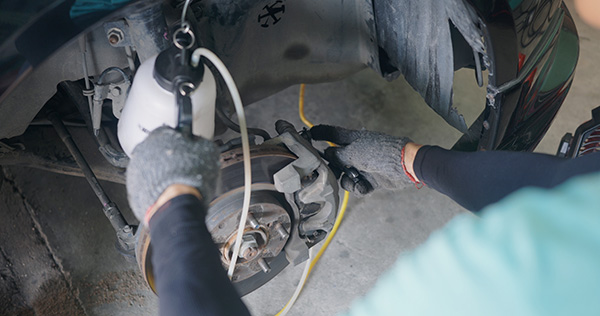
A proper brake fluid flush removes the worn fluid and fills the whole system with fresh fluid. Use the correct fluid specification, and bleed the brakes properly so air doesn't remain trapped. Some vehicles also require a specific procedure for cycling the ABS unit during service.
When Brake Fluid Service Makes Sense
No single interval fits every vehicle. The manufacturer's schedule, fluid type, age, driving conditions, and previous brake work all play a part. The best method is testing the brake fluid. It can show whether the moisture content has climbed too high even when the fluid does not look terrible.
Regular maintenance gives us a chance to catch fluid problems before the driver notices a change in pedal feel. If the fluid is very dark, heavily contaminated, several years old, or the service history is unknown, it is worth checking rather than waiting for a braking symptom to make the decision for you.
Get Brake Fluid Flush Service In San Jose, CA, With Dhillon Motorsports
If your brake fluid is old, dirty, contaminated, or you are not sure when it was last serviced, Dhillon Motorsports in San Jose, CA, can check the fluid's condition and inspect the hydraulic brake system for leaks, wear, or corrosion.
Schedule a visit and find out whether your brake fluid still has the protection and heat resistance your braking system needs.