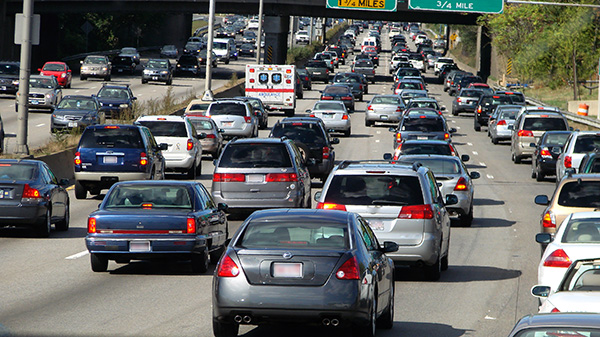
The next lane moves, yours stops, and switching looks like an easy way to get ahead. A minute later, that lane slows too. Heavy traffic often creates the impression of progress without a dependable gain.
The risk is more concrete. A sudden lane change closes gaps, surprises surrounding drivers, and leaves less time to react to braking ahead. Your car also has to steer and sometimes brake while sharing limited space.
At Dhillon Motorsports, we encourage drivers to keep vehicle condition and driving decisions working together. Tires and brakes help the car respond, while a deliberate lane plan reduces the demand you place on them.
Why Traffic Lanes Seem to Take Turns Moving
Congestion changes in waves. A vehicle brakes, the next driver reacts, and the slowdown travels through the line. Ramps, exits, turning movements, and larger vehicles also interrupt the flow. From your seat, the neighboring lane is easiest to notice when it moves past you. The stretches where your lane moves while theirs stops are less memorable. That makes the difference feel larger than it often is.
A lane that gains several cars at one point sometimes loses them farther ahead. Without knowing what happens along the whole route, an opening beside you gives little basis for predicting the arrival time.
Do Repeated Lane Changes Save Travel Time?
The answer depends on the route and traffic pattern. A lane leading around a blocked section serves a clear purpose. Switching repeatedly between ordinary congested lanes is a different choice.
Suppose a move puts you 4 cars farther ahead. That position only saves time if the gain remains through the rest of the queue. A merge, signal, or stopped vehicle farther along sometimes removes it completely.
There is no honest fixed promise that lane weaving saves a certain number of minutes. The outcome changes with conditions. What the driver does control is how many close interactions they create while trying.
For a daily San Jose commute, choosing the lane you need for your eventual exit and allowing a little extra travel time usually leads to a calmer drive than chasing every brief move beside you.
Blind Spots During Sudden Lane Changes
A neighboring vehicle sometimes sits outside the main mirror view. A quick steering move before checking the blind spot places your car directly in its path. Motorcycles and smaller vehicles are especially easy to miss in a hurried scan. Traffic farther behind also approaches the opening as you assess it. Judge the gap in motion, not as a still picture. Use the turn signal, mirrors, and a brief blind-spot check while maintaining awareness ahead. Driver-assistance equipment supplements those checks but operates within limits. A warning system shouldn't become permission to skip looking.
Short Gaps Leave Little Room After the Move
The destination lane needs enough space ahead and behind for your car to settle into the flow. Entering a narrow gap forces other drivers to adjust, often by braking.
That response creates another slowdown. It also raises collision risk when the next driver is distracted or already following too closely. A move that looks like a personal shortcut becomes a sudden problem for several vehicles.
Large trucks need more space around them. Avoid pulling in tightly ahead of one or lingering where its driver has limited visibility. A signal explains your plan; it doesn't create braking distance for the truck.
Steering and Braking at the Same Time
Tires have a limited amount of grip to share between slowing and turning. Abrupt steering while braking heavily demands more from that contact with the road.
Rain, worn tread, or uneven pavement reduces the margin. A car that feels stable on straight roads can become unsettled when the driver suddenly changes direction and speed at the same time.
Electronic stability systems help manage certain loss-of-control situations, but the available grip still sets the limit. Smooth inputs and adequate spacing reduce the need for the system to intervene.
If the car now pulls, shakes, or feels unstable on familiar roads, have it inspected. Driving habits and vehicle condition both affect the response.
Lane-Change Checks Before You Move
Before changing lanes in congestion, review:
- The reason for the move and the lane you need next
- Traffic ahead of the destination gap
- Vehicles approaching from behind
- Your mirrors and blind spot
- Space ahead and behind after entering
- A signal given before the steering movement
If those checks don't leave a clear opening, wait. Reaching the front of one small group isn't worth forcing another driver into an emergency response.
Missing an Exit Is Better Than Forcing a Late Move
Plan for exits early enough to cross lanes gradually when openings exist. Navigation instructions help, but the road still decides whether a move is available.
If you pass the exit, continue to the next safe route. A sudden cut across traffic or marked separation areas creates a far more serious problem than a longer drive.
Keep navigation changes for a passenger or a safe stop. Trying to reroute on the phone while watching for another gap combines two tasks that both need your eyes and decisions.
Vehicle Maintenance for Heavy Traffic
Brakes, tires, steering, and lights all support a controlled lane change. Tire pressure and condition affect grip, while a worn suspension component changes how the wheels hold their position.
Report a new clunk, pull, or vibration instead of adapting to it. The inspection should identify whether the concern comes from tires, alignment, suspension, braking, or another system.
Keep windows and mirrors clean, and adjust them while parked. Clear visibility makes a planned maneuver easier. A car with dependable responses also keeps you better prepared for the unexpected braking heavy traffic demands.
Vehicle Inspection and Auto Repair at Dhillon Motorsports
Dhillon Motorsports in San Jose, CA, can inspect brakes, tires, steering, and suspension issues that change how your vehicle responds in traffic. Describe the symptom and when it appears so we can review the systems involved.
Schedule auto repair or maintenance with Dhillon Motorsports before an unresolved handling problem complicates your next commute.