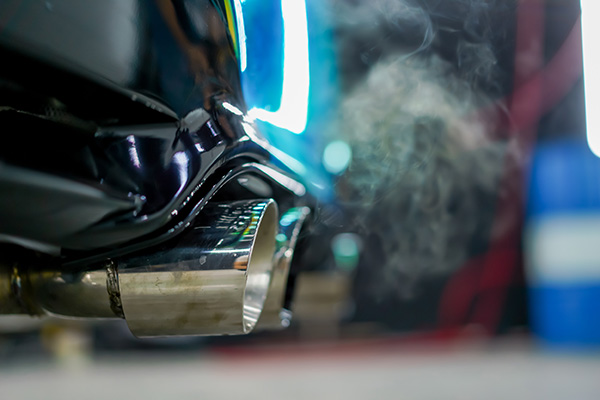
Blue exhaust smoke is one of those warning signs that gets a driver’s attention fast, and for good reason. At our shop, when a customer tells us they have noticed blue or bluish gray smoke coming from the tailpipe, we know the conversation is usually heading in one serious direction. In most cases, blue smoke means the engine is burning oil.
That matters because engine oil is supposed to stay inside the engine and lubricate moving parts. It is not supposed to be entering the combustion chamber and burning along with the air and fuel mixture. When oil starts getting into places it does not belong, the exhaust often tells the story before the driver fully understands what is happening.
The good news is that blue smoke can help narrow the problem down fairly quickly. The less good news is that it often points to wear or damage inside the engine or related systems. Some causes are more manageable than others, but none of them are something we recommend ignoring for long.
Why Blue Smoke Usually Means Burning Oil
Exhaust color can reveal a lot. Thick black smoke often points toward too much fuel. White smoke often raises questions about coolant or condensation depending on the situation. Blue smoke usually points toward oil making its way into the combustion process.
When that oil burns, it creates the distinctive bluish or blue gray smoke drivers notice from the exhaust. Sometimes it is heavy and obvious. Sometimes it only shows up at startup, during acceleration, or after idling. The pattern matters, but the message is usually the same. Oil is getting into the wrong part of the engine. At our shop, we think of blue smoke as one of the clearest visual signs that engine health deserves a closer look.
It May Show Up Only In Certain Situations
One thing that confuses a lot of drivers is that blue smoke does not always show up all the time. In some cases, it appears most noticeably during startup after the car has been sitting. In other cases, it shows up during hard acceleration or after long periods of idling.
If the smoke is only happening once in a while, some drivers are tempted to shrug it off. We do not recommend that. Intermittent blue smoke is still blue smoke, and it still means oil is being burned somewhere in the process.
Worn Valve Seals Are One Possible Cause
If blue smoke is most noticeable when you first start the car after it has been sitting, worn valve seals are often part of the conversation. Valve seals help control how much oil moves around the valve area. When they wear out, oil can slowly seep into the combustion area while the engine is off. Then when you start the car again, that oil burns off and creates a puff of blue smoke.
This is one of the more classic blue smoke patterns, especially on older engines. It may not fill the street with smoke every time, but it is still a sign that internal sealing is not what it used to be.
Worn Piston Rings Can Be More Serious
Another common cause of blue exhaust smoke is worn piston rings. Piston rings help seal the combustion chamber and keep oil where it belongs. When those rings wear down, oil can slip past them and enter the combustion area more regularly.
This kind of issue often becomes more noticeable under acceleration because engine load increases and the worn sealing surfaces are challenged more heavily. Blue smoke during harder driving or constant blue smoke under load often makes us think more about ring wear and overall engine wear. From our side of the shop, this is one of the more serious possibilities because it points deeper into engine condition rather than a smaller upper engine sealing issue.
The PCV System Can Also Play A Role
Sometimes blue smoke is not coming from major internal engine wear right away. A problem with the PCV system, which helps manage crankcase pressure and oil vapors, can also contribute. If the PCV valve or related system stops working the way it should, excess oil vapor may get pulled into the intake and burned.
This can create blue smoke and oil consumption symptoms that mimic larger engine issues. That is one reason proper diagnosis matters. You do not want to assume the absolute worst until the simpler possibilities have been checked too.
Turbocharged Engines Have Their Own Risk Area
If your vehicle has a turbocharger, blue smoke can also point toward oil leaking past turbo seals. A failing turbo can allow oil into the intake or exhaust side of the system, where it then burns and creates blue smoke.
In turbocharged vehicles, the smoke pattern may be influenced by boost, load, and operating conditions. This is one of the reasons blue smoke diagnosis needs to account for the exact engine setup rather than assuming every vehicle has the same list of causes.
Oil Consumption Often Goes With It
A vehicle burning oil usually does not only tell you through smoke. It often shows up in the dipstick readings too. If you are having to add oil more often than expected and you are also seeing blue smoke, those two clues usually belong in the same conversation.
At our shop, when a customer says the engine has been using oil between changes and the exhaust is starting to look bluish, that is a strong signal that the engine or a related system needs real attention.
Why Blue Smoke Is Bad For Engine Health
Blue smoke matters because it points toward oil control problems, and oil control is a huge part of engine health. An engine that is burning oil is not operating the way it should. Over time, that can affect spark plugs, emissions components, combustion quality, and overall reliability.
A few problems that can grow along with blue smoke include:
- Increased oil consumption
- Fouled spark plugs
- Rough running
- Reduced engine performance
- Catalytic converter damage over time
- Bigger engine wear problems if the root cause is ignored
The smoke is the part you can see. The wear behind it is what worries us more.
Some Drivers Notice It More During Acceleration
If you see blue smoke mainly when accelerating, it often means the engine is pulling oil into the combustion process more heavily under load. Worn piston rings or turbo related issues become stronger suspects in that situation, though other causes are still possible. Startup smoke, idle smoke, and acceleration smoke do not all point in the same direction.
Do Not Assume It Is Just An Old Car Thing
A lot of people treat blue smoke like an old car quirk, especially if the vehicle still runs and drives. We understand why. Some older engines do burn some oil. But blue smoke is still a sign that something is wrong, not just something charming and vintage. At our shop, we do not like normalizing visible oil burning. Even if the car still feels okay, the engine is telling you it has a health issue worth understanding.
What You Should Do If You See Blue Smoke
The best next step is not to panic, but it is definitely not to ignore it either. Check the oil level and keep an eye on how quickly it drops. Pay attention to when the smoke happens. Then have the engine inspected properly before the problem grows.
The longer oil burning goes on, the more chance there is for added wear, more oil usage, and higher repair costs. In some cases, catching the issue earlier helps limit the damage and gives you more options.
Visit Us ASAP
Blue exhaust smoke usually means your engine is burning oil, and that is not a sign to brush off. If you are seeing blue smoke from your exhaust, turn to Dhillon Motorsports in San Jose, CA as soon as possible. We can inspect the engine, check for oil burning issues, and help you understand what is affecting your engine’s health before the problem gets worse.